If you are looking for the means to easily travel, provide security for you and your loved ones, and general opportunities a second passport through investment may be the answer. Investment migration is growing, as the world becomes more unstable, yet more globalized. Citizenship by investment programs offer a range of benefits, and the investment options include various paths to acquire full citizenship, sometimes not just for you, but your family. Let us break down how you can get citizenship in exchange for different types of investment, and explore several countries we recommend.
First, what is Citizenship By Investment? Citizenship by Investment (CBI), sometimes known as economic citizenship, is the process of obtaining a second passport in return for investment in another country. Unlike naturalization, investment programs require no long-term residence — sometimes second citizenship can be obtained in 2-to-12 months. It is done through a donation or an investment in real estate, funds, businesses, shares, and bonds.
Many countries in the Caribbean, EMEA, and Oceania offer citizenship to investors to attract foreign capital, fund infrastructure, and drive economic growth. Note, there are also residency by investment programs, which can be great for multiple reasons, however, they do not always provide you with the opportunity to quickly obtain a passport by investment.
Apart from making an investment or a grant, the programs include a few requirements, although they’re not too extensive. You must be 18+, have no criminal history, and prove the legal source of funds. Most investment related citizenship programs have family inclusion, covering spouses, children, parents, and siblings. Sometimes you may need to reside in a country for a specified time, but not always. Due diligence checks ensure compliance with international regulations. Citizenship by investment programs allow for visa-free travel to many countries, tax benefits, and business expansion opportunities.
Read on to learn about the best citizenship by investment programs and why you should consider one. Remember, you can contact our experts to learn more in a complimentary consultation, and which countries offer citizenship by investment that suit your needs. Start your journey with us, and you may get citizenship, with added safety, flexibility, and freedom for your family.
Benefits of Citizenship by Investment
CBI allows for you to have the full rights of the passport holder from the country of citizenship, meaning by securing a second citizenship through investment, individuals and families gain access to a more secure, flexible, and prosperous future. Citizenship by investment programs give you the following key benefits:
- Global Mobility: Citizenship by Investment programs open visa-on-arrival access or allow visa-free travel to key global destinations, including the Schengen Zone, the UK, and, in some cases, China. This facilitates seamless international travel for business, leisure, and personal matters.
- Business: Want to establish a business or invest in prosperous and safe countries? Getting citizenship from a new country opens doors to new markets. Some programs grant access to regional economic unions, such as CARICOM or the European market, streamlining cross-border trade and corporate operations.
- Financial Advantages: CBI is an effective tool for wealth protection and diversification by providing access to tax-friendly jurisdictions, secure banking, and real estate opportunities. Some countries with investment-based citizenship have no wealth, inheritance, or capital gains taxes, making them attractive for high-net-worth individuals.
- Family: Most programs let investors to include immediate family members in their applications, securing second citizenship for spouses, children, parents, grandparents, and even brothers and sisters. From travel freedom to career and education prospects – this ensures comprehensive long-term benefits for future generations.
- Plan B: Are you concerned about political instability or economic uncertainty? A second citizenship can become your backup plan allowing immediate relocation to a stable country. It ensures personal safety and financial security in case of emergencies or shifting geopolitical landscapes.
- Education & Healthcare: Second citizenship in certain countries grants access to world-class education and healthcare systems, including prestigious universities and internationally recognized medical facilities. For families, this can be a critical factor for determining the best investment program.
Best 11 Citizenship by Investment Countries in 2026
With numerous citizenship-by-investment programs available worldwide, investors often face the challenge of selecting the most suitable ones. Caribbean, EMEA (Europe, the Middle East, Africa), and Oceania countries with CBI programs have unique conditions, pros and cons. Let’s explore the best citizenship offers.
Caribbean Citizenship by Investment Programs
The Caribbean is one of the most sought-after regions in terms of Citizenship by Investment, offering attractive visa benefits, low taxes, and fast-track processing. Below is an up-to-date overview of the local CBI programs in 2026 based on the latest investment requirements.
The World’s Most Affordable Citizenship in Dominica – $200k
Dominica’s CBI opportunity is one of the most affordable in the Caribbean. Investors can obtain citizenship by making a non-refundable contribution of at least $200k to the government fund or purchasing government-approved real estate with the same value. A Dominican passport grants visa-free travel benefits to over 140 countries, including the Schengen Zone. The processing time is 3-to-6 months, and there’re no residency requirements.

| Financial thresholds | $200k (donation) or $200k (investment) |
| Time to citizenship | 3-6 months |
| Entry privileges | 140+ countries (Schengen, Hong Kong, China, etc.) |
| Dependents | Spouse, children, parents |
| Mandatory visit | ❌ |
Diverse Investment Options in St. Lucia – $240k+
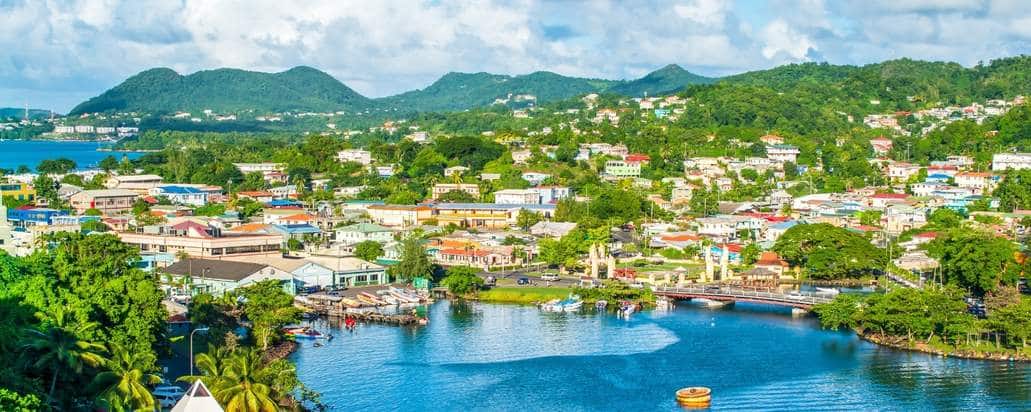
St. Lucia provides multiple investment options, allowing flexibility. Investors can obtain citizenship by donating $240k, purchasing an approved real estate or government bonds for $300k, or investing $250k in an approved business. A St. Lucian passport enables visa-free travel to 140+ countries, including Schengen states and the UK. Processing takes three to six months, and applicants are not required to visit the country.
| Financial thresholds | $240k (donation), $250k (investment) |
| Time to citizenship | 3-6 months |
| Entry privileges | 140+ countries (Schengen, the UK, Hong Kong, etc.) |
| Dependents | Spouse, children, (grand)parents, siblings |
| Mandatory visit | ❌ |
E-2 US Visa via Grenadian Citizenship – $235k+
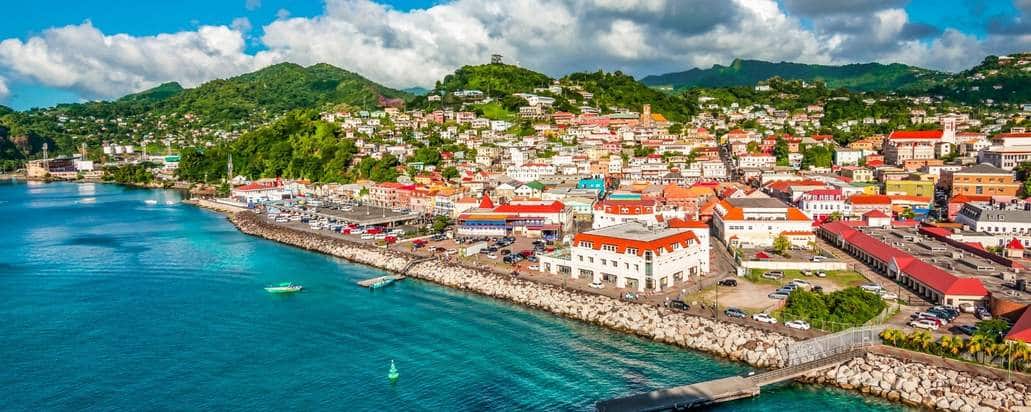
Grenada stands out among Caribbean CBI programs because its citizens qualify for a US E-2 Investor Visa, allowing them to live and work in the United States. Investors can obtain Grenadian citizenship by making a non-refundable donation of $235k or purchasing real estate for at least $270k in government-approved projects. Grenadian citizens-investors enjoy visa-free travel benefits to over 150 countries, including the Schengen Zone, the UK, and China. The application process typically takes three to six months.
| Financial thresholds | $235k (donation) or $270k (investment) |
| Time to citizenship | 3-6 months |
| Entry privileges | 150+ countries (Schengen, the UK, China, etc.) |
| Dependents | Spouse, children, (grand)parents, siblings |
| Mandatory visit | ❌ |
Family-Friendly Antiguan Citizenship by Investment Program – $230k+
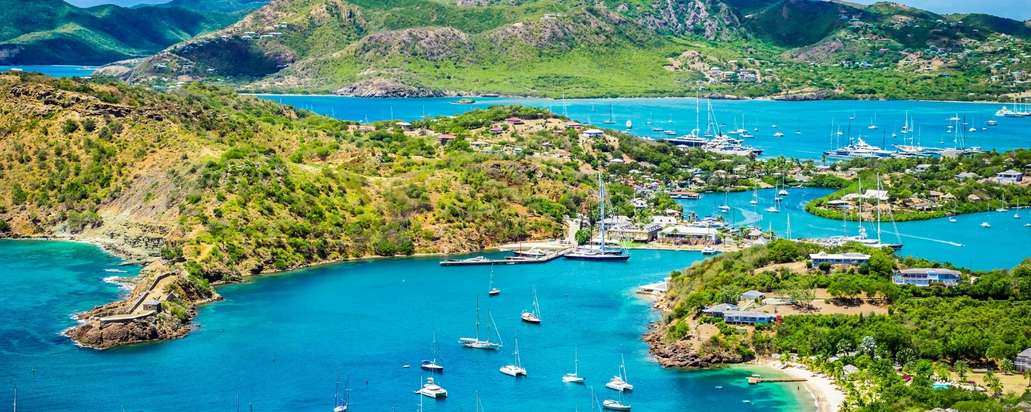
Antigua and Barbuda citizenship by investment offers one of the most cost-effective programs for families, with a simple five-day residency requirement over five years. Antigua and Barbuda citizenship by investment is a commendable choice for families as it covers a wide range of dependents. Apart from a standard donation ($230k), candidates can contribute $260k to the University of the West Indies Fund (only for large families). There are also 2 refundable investment options: government-approved development or business financing (both at $400k+). An Antiguan passport allows visa-free access to over 150 countries, including the EU, the UK, and China. Processing takes approximately 3-to-6 months.
| Financial thresholds | $230k+ (donation) or $400k (investment) |
| Time to citizenship | 3-6 months |
| Entry privileges | 150+ countries (Schengen, the UK, China, etc.) |
| Dependents | Spouse, children, (grand)parents, siblings |
| Mandatory visit | 5 days on the islands within 5 years |
The Most Time-Honored yet Progressive St. Kitts and Nevis CBI Program – $250k
St. Kitts and Nevis offers the oldest Citizenship by Investment program. Established in 1984, its CBI is also one of the most progressive. The St. Kitts and Nevis citizenship program permits cryptocurrency as a source of investment funds from March, 2025. The minimum investment amount is either a $250k donation, a $325k real estate investment (government-approved projects), or a $600k investment in private real estate. St. Kitts and Nevis citizenship by investment is truly excellent choice, combining modern approaches with a long-standing tradition.
With one of the shortest processing times (3-to-4 months), the country also offers a 60-day fast-track option for an additional fee. You are granted visa-free travel benefits to over 150 countries, including Schengen states and the UK.

| Financial thresholds | $250k (donation) or $325k (investment) |
| Time to citizenship | 3-4 months |
| Entry privileges | 150+ countries (Schengen, the UK, etc.) |
| Dependents | Spouse, children, (grand)parents |
| Mandatory visit | ❌ |
EMEA (Europe, Middle East, and Africa) Citizenship by Investment Programs
The EMEA region offers a mix of high-end and budget-friendly Citizenship by Investment options, each with unique advantages. From EU residency and citizenship to business and real estate investment opportunities, these programs cater to investors seeking different levels of global mobility and financial benefits.
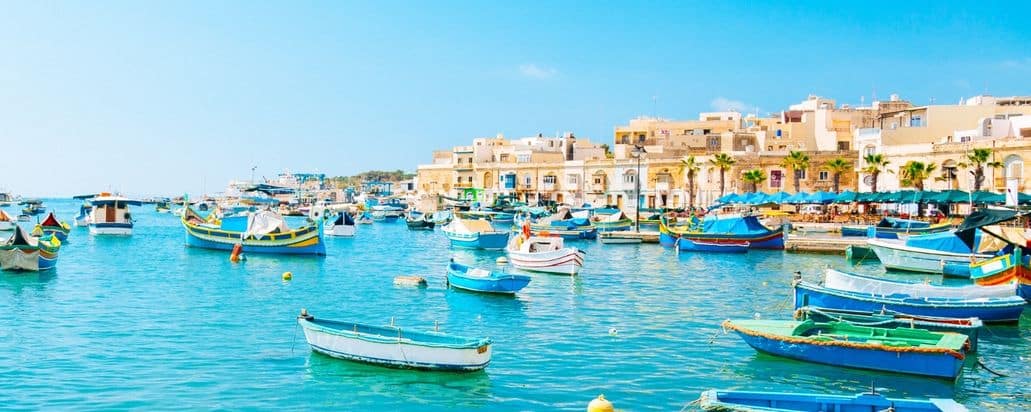
High Investment Threshold & EU Passport in Malta – €715k+
Malta offers the only EU Citizenship by Investment program. It’s also the most expensive. The Maltese Citizenship by Naturalization for Exceptional Services by Direct Investment (MCNESDI) program requires investors to make a non-refundable contribution and fulfill residency requirements before obtaining a passport.
To qualify, one must contribute to the Maltese economy and rent a house for at least five years (totaling €715k). The investor must maintain formal residence in Malta for 12-36 months, as well. Maltese citizenship grants full EU rights, including the ability to live, work, and study in any EU country. The passport provides visa-free access to over 180 countries, including Schengen, the UK, the United States, and Canada. However, since due diligence is strict, the program has a high rejection rate. Nonetheless, for those seeking the advantages of the EU, the Malta citizenship by nvestment program stands alone.
| Financial threshold | €715k |
| Time to citizenship | 12-36 months |
| Entry privileges | 180+ countries (EU, the UK, the US, Canada, etc.) |
| Dependents | Spouse, children, parents |
| Mandatory visit | Investor and dependents must formally reside on the island for 12-36 months |
The World’s Most Popular Citizenship by Investment Program Based in Turkey – $400k
Turkey accepts thousands of applicants yearly. The CBI program is known for offering real estate citizenship, and is a popular destination for investors. The Turkish CBI program lets you acquire citizenship by making an investment of at least $400k in real estate, depositing $500k, creating at least 50 jobs or investing $500k into a fund or shares. Its passport provides visa-free travel to 110+ countries. A strategic location makes Turkey an attractive hub for business and investment. Additionally, Turkish citizens can get to the United States via an E-2 business visa.

| Financial thresholds | $400k (investment) or 50 jobs |
| Time to citizenship | 6-9 months |
| Entry privileges | 110+ countries (including Japan, South Korea) |
| Dependents | Spouse, children |
| Mandatory visit | 1+ |
Budget-Friendly EMEA Citizenship Option in Egypt – $250k
Egypt’s CBI is one of the Middle East’s most affordable. It’s an attractive option for investors looking for a second passport at a lower cost. The program offers many investment opportunities, including a non-refundable donation of $250k, real estate investment of $300k, business investment of $350k (plus a $100k donation), and a bank deposit of $500k. The Egyptian passport provides visa-free access to around 70 countries, including Hong Kong, Malaysia, and the Caribbean. The process is fast, with citizenship granted in as little as six months.

| Financial thresholds | $250k (donation) or $300k (investment) |
| Time to citizenship | 6 months |
| Entry privileges | 70+ countries (including Hong Kong, Malaysia) |
| Dependents | Spouse, children |
| Mandatory visit | 1+ |
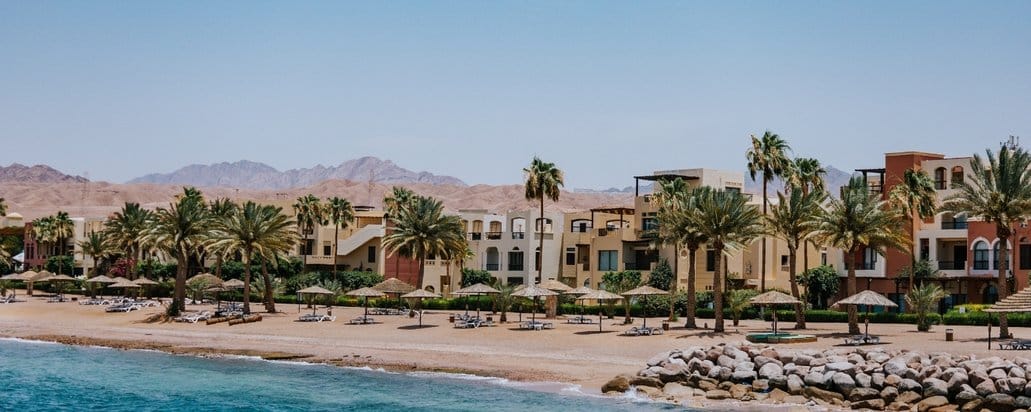
Pricy Citizenship by Investment for Businessmen in Jordan – $750k+
Jordan’s CBI program is designed for investors looking to establish a long-term business presence in the Middle East. Unlike other countries, Jordan doesn’t offer a donation option. The program’s participants can make investments in business projects outside Amman that create 10+ jobs ($750k), $1M in capital city projects creating 20+ jobs, $1M in government bonds, $1M in a central bank deposit, and $1.5M in shares of Jordanian companies.
| Financial thresholds | $750k |
| Time to citizenship | 6+ months |
| Entry privileges | Limited (regional access in the Middle East) |
| Dependents | Spouse, children |
| Mandatory visit | ❌ |
Oceania Citizenship by Investment Programs
Vanuatu and Nauru CBI programs provide a fast-track route to citizenship and tax benefits. Both programs currently have no refundable investment options.
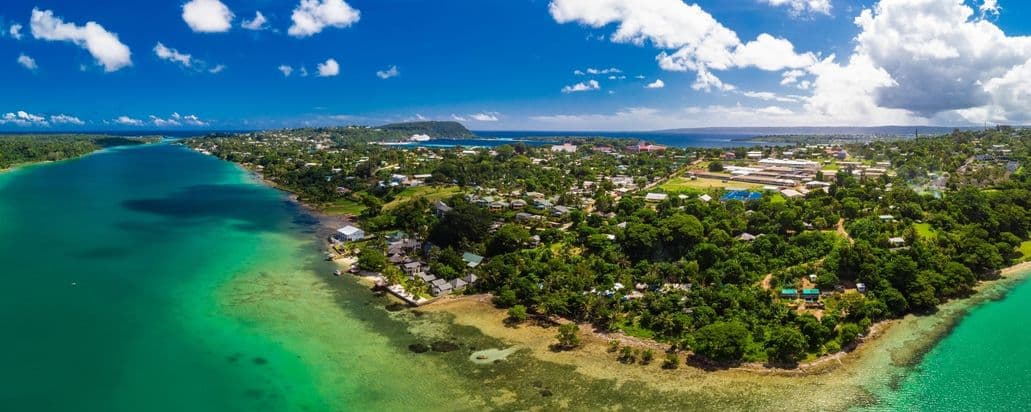
The Fastest Passport Processing in Vanuatu – $145k
Many want to know which citizenship by investment program is the fastest, and you’d be hard pushed to find a better choice than Vanuatu. Vanuatu’s citizenship by investment program is fast and reliable. Vanautu citizenship is obtained via a non-refundable contribution via its Development Support Program (DSP), starting at $145k for a single applicant. A Vanuatu passport holder gets visa-free or visa-on-arrival access to over 95 countries, including Hong Kong, and Singapore. The processing time is typically 2 to 3 months. There are no residency requirements before or after obtaining Vanuatu citizenship.
| Financial thresholds | $145k |
| Time to citizenship | 2-3 months |
| Entry privileges | 95+ countries (including the UK, Hong Kong, Singapore) |
| Dependents | Spouse, children, (grand)parents |
| Mandatory visit | ❌ |
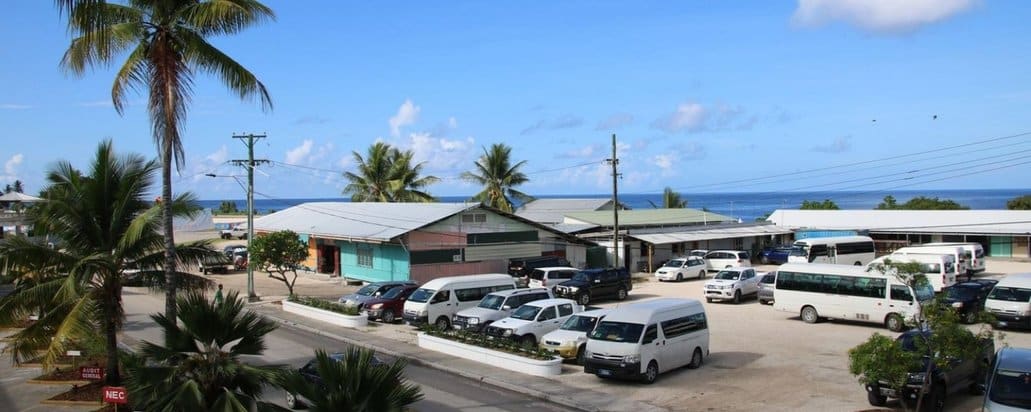
Nauru as an Emerging Player in the Citizenship by Investment Market – $130k
Recently launched the Nauru Economic and Climate Resilience Citizenship Program (ECRCP) attracts investors by offering passports in exchange for grants on sustainability projects. To qualify, an investor must make a non-refundable contribution of at least $105k and pay a $25k fee. A Nauruan passport provides visa-free or visa-on-arrival access to 89 countries, including Hong Kong, Singapore, and the United Kingdom. The program’s rules state no mandatory residency.
| Financial thresholds | $105k (donation) |
| Time to citizenship | 3-4 months |
| Entry privileges | 89+ countries (including Hong Kong, Singapore, the UK) |
| Dependents | Spouse, children, (grand)parents, and siblings |
| Mandatory visit | ❌ |
Investment Options for Obtaining Citizenship
To acheive citizenship by investment, you need to know the options. There are different investment types that each CBI programs allow, and you can choose the most suitable investment routes to citizenship based on your financial capacity and long-term objectives:
Citizenship by Government Fund Donation
A non-refundable contribution to a national fund is the most common, the fastest, and cheapest way to obtain a second passport. It’s often the most straightforward one, as well. The majority of programs have options for contributing to government funds that support infrastructure, education, and social projects. This is often because many of the countries with citizenship by investment are developing or acquire a significant part of their wealth from foreign investment.
Citizenship by Real Estate Investment
This is the seconnd most common way of obtaining a second passport for a contribution to a country’s economy. Applicants make a real estate investment to qualify. Caribbean countries restrict eligible investments to government-approved projects (luxury resorts, residential developments). The selected real estate typically must be held for a minimum period (3–7 years) before resale while retaining citizenship. Its owner can generate rental income while holding the investment.
Citizenship by Business Investment
In St. Lucia, Jordan, Antigua, Turkey and Egypt investors can qualify via local businesses and/or creating jobs. Citizenship is obtained by making investments into establishment or expansion of a business venture. An applicant must employ local workers and make investments in approved industries (tourism, finance, agriculture, technology).
Citizenship by Government Bonds
St. Lucian and Jordanian programs allow investors to qualify for citizenship and passport by purchasing government-issued bonds, offering a low-risk alternative to real estate and business. Unlike other investments, government bonds are state-backed and generally risk-free. Investments are returned (zero coupon) after a designated period.
Citizenship by Fund Investment
Turkey and Malta offer an alternative route through investments into designated pension, venture capital, and real estate funds. Fund investments involve high risks but allow for greater returns.
Choosing the Right Investment Route
The best route depends on an applicant’s goals, budget and risk tolerance. Those looking for fast processing may prefer government fund donations, while real estate and business investment offer resale and income generation opportunities in addition to an extra citizenship and a passport.
Comparison of Citizenship by Investment Programs
| Country | Financial Options | Time to Citizenship, months | Visa-Free Travel (country count) | Residency / Visit | Family Inclusion (only relatives other than spouse and children are listed) | Tax Benefits |
| Antigua & Barbuda | $230k donation, $400k Investment | 3-6 | 150+ (EU, UK, China) | 5 days in 5 years | (Grand)parents, siblings | No PIT |
| Dominica | $200k donation, $200k Investment | 3-6 | 140+ (EU) | ❌ | (Grand)parents | ❌ |
| Grenada | $235k donation, $270k Investment | 3-6 | 150+ (EU, UK, China) | ❌ | (Grand)parents, siblings | ❌ |
| St. Kitts & Nevis | $250k donation, $325k Investment | 2-4 | 150+ (EU, UK) | ❌ | (Grand)parents | No PIT |
| St. Lucia | $240k donation, $300k Investment | 3-6 | 140+ (EU, UK) | ❌ | (Grand)parents, siblings | ❌ |
| Turkey | $400k Investment, business with 50 jobs | 6-9 | 110+ (Japan, South Korea) | 1+ visit | – | Tax benefits for business owners |
| Malta | €715k | 12-36 | 180+ (EU, UK, United States, Canada) | 12-36 months of formal residence | Parents | ❌ |
| Egypt | $250k donation, $300k Investment | 6 | 70+ (Hong Kong, Malaysia) | 1+ visit | – | ❌ |
| Jordan | $750k Investment | 6+ | Limited (Middle East access) | 1+ visit | – | ❌ |
| Vanuatu | $145k donation | 2-3 | 95+ (UK, Hong Kong, Singapore) | ❌ | (Grand)parents, parents | ❌ |
| Nauru | $130k donation | 3-4 | 89+ (Hong Kong, Singapore, UK) | ❌ | (Grand)parents, siblings | ❌ |
Requirements for Citizenship by Investment
Citizenship by investment is a legal process, and offered in a number of countries. However, each country has specific requirements for to ensure that only qualified and reputable individuals obtain a second citizenship. These criteria typically include age limits, background checks, financial transparency, and documentation.
Citizenship by Investment programs’ participants generally must be at least 18 years old, in good health (some countries may require a medical certificate), and able to prove the legality of their investment funds. All applicants must pass strict background checks to ensure they:
- Have no criminal record;
- Aren’t involved in money laundering or fraud;
- Haven’t been denied visas in major jurisdictions (e.g., Schengen, US, UK).
Some citizenship by investment programs’ rules involve stricter due diligence (Malta and St. Kitts & Nevis). It frequently leads to higher rejection rates for second-citizenship applicants with questionable backgrounds.
A complete citizenship by investment application must include the following documentation:
- Valid passport and national ID;
- Birth certificate;
- Marriage certificate (if applicable);
- Proof of residential address;
- Police clearance certificate (criminal background check);
- Medical certificate (where required);
- Financial statements & proof of investment.
All documents must be translated into an official language of the host country and notarized. Some countries, e.g. Malta and Egypt, may require interviews or in-person visits as part of the application process.
Persons seeking a second citizenship by investment must carefully prepare their applications to avoid delays or rejections. Due diligence and financial transparency are the most critical factors, as failure to meet these standards can lead to application denial.
Does Citizenship by Investment Require Renouncing Your Current Passport?
One of the key concerns when considering a second citizenship by investment is related to current nationality renouncing. A country of birth may prohibit or restrict holding multiple nationalities. In such cases investors have to renounce their previous nationality upon acquiring a new passport.
Most passport programs allow dual citizenship, but there are 2 exceptions. In Egypt, dual citizenship is permitted but requires notifying authorities. Holders of Egyptian and foreign passports must declare their second nationality and may have restrictions in government roles. Dual nationality isn’t officially allowed in Jordan, but some exceptions exist for those holding another nationality before obtaining Jordanian citizenship.

FREE EXPERT CONSULTATION
on economic citizenship programs,
how to choose a jurisdiction
and get a foreign passport.
on economic citizenship programs, how to choose a jurisdiction and get a foreign passport.
Regulations & Programs’ Legal Aspects
Citizenship by Investment programs are subject to strict international regulations ensuring transparency and preventing abuse. Governments must comply with anti-money laundering (AML) policies, Financial Action Task Force (FATF) guidelines, and evolving global regulations.
FATF sets global AML standards, which these programs must follow to prevent financial crimes, tax evasion, and illicit transactions. Key AML requirements for CBI applicants:
- Full disclosure of the source of funds (bank statements, tax records, and business ownership documents).
- Screening against international sanctions lists (Interpol, UN, EU, and OFAC watchlists).
- Mandatory due diligence to verify an applicant’s background and ensure compliance with global financial regulations.
Countries with strong AML and FATF compliance (e.g., Malta, St. Kitts & Nevis, and Grenada) enforce enhanced due diligence checks, making them more reputable but also stricter in their screening processes.
Global authorities continue tightening oversight on Citizenship by Investment programs to prevent misuse. Recently, St. Kitts & Nevis, Grenada, and St. Lucia have strengthened background checks to comply with EU and FATF recommendations. The UK and EU revoked visa-free travel benefits for Vanuatu and Dominica passport holders due to concerns over weak due diligence.
Conclusion – Choosing the Right Citizenship by Investment Program
Selecting the ideal Citizenship by Investment program in 2026 requires a strategic balance between investment amount, processing time, visa-free access, and long-term goals. Whether you prioritize family inclusion, access to key markets, or fast-track passport options, each country offers distinct advantages. To make the right decision, compare:
- Minimum investment thresholds — from $130k in Nauru to €715k in Malta;
- Visa-free travel scope — ranging from 70 to 180+ countries;
- Family eligibility and residency obligations;
- Tax implications and business opportunities.
Ultimately, the best program aligns with your personal, financial, and geopolitical priorities. Getting citizenship by investment is not always straightforward, however. Working with a licensed agent ensures your application is compliant, complete, and strategically positioned for success. With expert guidance, your path to second citizenship can be efficient, secure, and tailored to your global ambitions. Contact us for assistance getting citizenship in a country listed in this article and explore options for you and your family today.
What is Citizenship by Investment and how does it work?
Citizenship by Investment is a legal process through which individuals and families can obtain second passports by making financial contributions to a country’s economy. This can be done via donations to government funds or investments in real estate, businesses, and bonds. Unlike naturalization, citizenship by investment doesn’t require long-term residence. Processing time is 2-to-36 months. Applicants must typically be 18+, have a clean criminal record, and prove the legal origin of their investment funds. Most programs allow family inclusion.
Which countries offer the best Citizenship by Investment programs in 2026?
In 2026, the top countries offering Citizenship by Investment programs include Dominica, St. Lucia, Grenada, Antigua & Barbuda, St. Kitts & Nevis, Turkey, Malta, Egypt, Jordan, Vanuatu, and Nauru. These countries differ in investment thresholds, processing times, cross-border travel facilitation, and family inclusion options. Caribbean nations stand out for affordability and speed; Malta offers full EU citizenship but is the most expensive; Turkey provides business advantages; while Vanuatu and Nauru are known for fast processing and low costs.
What are the minimum investment requirements for citizenship programs?
Minimum investment requirements for citizenship programs in 2026 start at $130k in Nauru (donation) and range up to €715k in Malta (combination of donation and real estate rental). Caribbean countries typically require $200k–$270k either as donations or investments. E.g., Dominica and St. Lucia start at $200k–$240k, Grenada at $235k, and Antigua at $230k. Turkey requires a minimum of $400k in real estate, Egypt starts at $250k for donations, and Jordan demands at least $750k through business investment. Vanuatu’s threshold is $145k for a donation.
How long does it take to obtain a second citizenship through investment?
Processing times for obtaining a second passport through investment vary by country and range from as little as 2 months to up to 3 years. The fastest options include Vanuatu (2–3 months), St. Kitts & Nevis (3–4 months with a 60-day fast-track option), and other Caribbean programs like Dominica, St. Lucia, Grenada, and Antigua (3–6 months). Turkey typically processes applications in 6–9 months, Egypt and Jordan – in around 6 months. Malta has the longest time to citizenship, requiring 12 to 36 months due to strict residence rules and due diligence.
Can an investor include family members in a Citizenship by Investment application?
Programs’ rules allow relative inclusion, covering large families in most cases. Eligible dependents commonly include spouses, children, and parents. In some cases grandparents and siblings are allowed as well.
What are the key benefits of obtaining a second citizenship through investment?
Key benefits of obtaining a second citizenship through investment include enhanced global mobility with facilitated entry to 180+ countries, access to tax-friendly jurisdictions, secure banking, and expanded business opportunities. Investors gain a Plan B for political or economic instability, and can secure a better future for their families through access to quality education and healthcare.
